Straws, Camels, Cups, Capacity
Expecting yourself to have the capacity of a 32oz Stanley cup, when you're really an 8oz juice glass is going to result in overload, overwhelm, and usually shame and self-judgement.

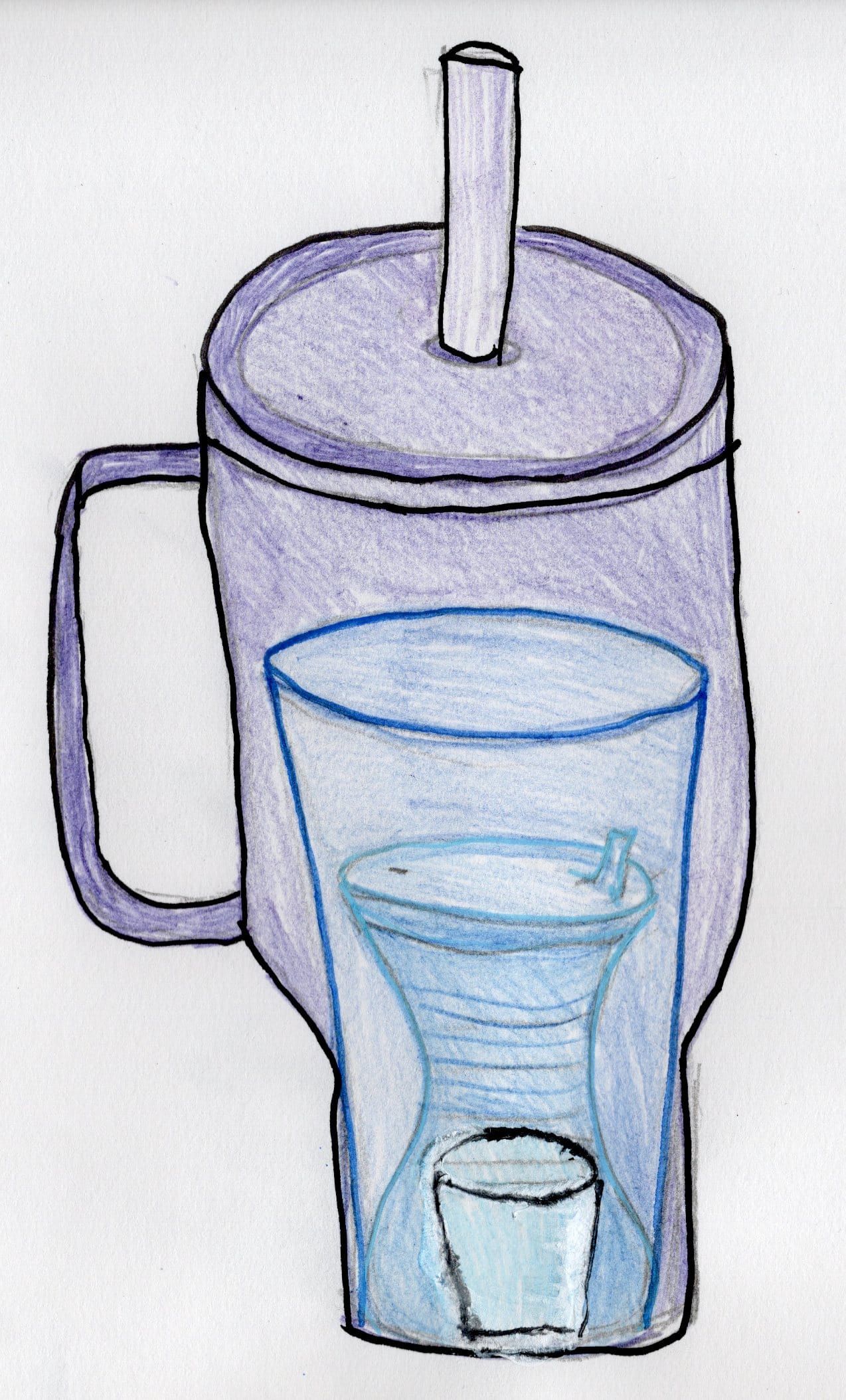
I had the same conversation multiple times last week. A client expressed judgement of their big reactions to small things. They expressed confusion as to why they are having a hard time with something that isn't a "big deal" when they think about it logically. And with some digging we would discover that they aren't having this big reaction to a small thing by itself, it's usually the last thing on a massive pile of small things. It is the straw that broke the camel's back.
It's important to remember that that phrase is used to refer to an overloaded beast of burden. And when one final, small/light thing was added it was too much for the animal to bear and it broke. 1 piece of straw is light, but 1000lbs of straw is still 1000lbs.
My clients judge themselves for breaking, becoming dysregulated due to a "small" thing, focusing on the smallness of the upset or inconvenience, and ignoring all of the thousands of other burdens that they are carrying. One dropped spoon isn't a problem by itself, but the dropped spoon after the long day of decisions at work, and the chores, and the moldy vegetable in the drawer, and the argument with the child, and remembering you need to pay bills, and, and, and...it becomes overload. It also often becomes another way to judge and criticize the self.
The conversation I then have is about capacity. Some people have a huge amount of capacity and room to spare. Other people have maxed out their large capacity. And others are working with a much smaller capacity. A shot glass, a sippy cup, water glass and a big straw tumbler all hold water, but of very different amounts . Some of those containers spill easily, while others are spill-proof. What it takes to add or subtract from each container will vary significantly. Parenting, work, and school obligations, extended family obligations, aging, physical health, disability, financial stress, all impact how much capacity we may have at any given point.
Expecting yourself to have the capacity of a 32oz Stanley cup, when you're really an 8oz juice glass is going to result in overload, overwhelm, and usually shame and self-judgement. A neurodivergent person for whom the world is overwhelming may have less capacity to do a "simple" task than a neurotypical person for whom the world isn't as overwhelming. And holding yourself to that standard of large capacity will result in burnout because you're overflowing over and over again. The idea that "we all have the same 24 hours" is an offshoot of this idea. My clients in their 20s will say "but I could do all this when I was in high school and I was fine!" At which point I remind them that someone else was paying the rent, buying the groceries and making their doctor's appointments for them, they just had to show up. Executive function load is a huge part of capacity.
My last post here was in May. June had all of the end-of-school-year activities, I had a fairly major death in the family, which meant out of state travel, and then an old injury flared up in a bad way. My capacity for doing anything other than just getting by, parenting my kids and getting to work shrunk to nothing. Anything "extra" went by the wayside because I really did not have the time or energy for it. My capacity was reduced from my usual amount due to grief and physical pain. My house got messy, I wasn't able to show up in my relationships the way I'd like, and I wasn't able to do any of the creative things I like to do. Things are better now, the demands on my time are fewer, I've moved through the grief, and I'm working on healing the injury, so I have more capacity.
So how do you fix it? Sometimes it's about recognizing where your capacity lies at any given point, and accepting that you can't do more than that. (Like acknowledging the impact of grief.) Finding ways to decrease demands that fill up capacity so that you're not overflowing, by prioritizing things, or asking for help from others. Finding ways to empty the cup a little so that it's not quite at spillover all the time. Taking a walk, hanging out with a friend, eating something delicious, taking a nap are all potential options. Over time capacity can expand in some areas, like taking on more responsibility at work, or learning a new strategy to parent in a challenging situation. However, if you're running at your max, if you're overflowing, it's very hard to expand, because you're already in overload.
To end: we all have different capacity, and that may shift and change over time. The overwhelm is from being at or over capacity. You're not broken, you're overwhelmed. And you're far from alone.
I hope to have more capacity once the school year starts and I have some more free time, so these will hopefully be more regular!
Take good care of yourselves.